
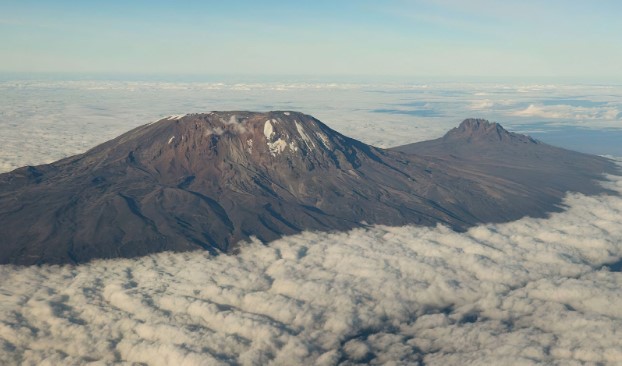

Mount Kilimanjaro stands as one of the world’s most iconic peaks, beckoning adventurers to test themselves against Africa’s highest mountain. At 5,895 meters above sea level, this majestic volcano in Tanzania represents an extraordinary challenge that remains remarkably achievable for everyday adventurers. Unlike many of the world’s great peaks, climbing Kilimanjaro doesn’t demand technical expertise, expensive specialized equipment, or years of mountaineering experience. What it does require is mental fortitude, physical conditioning, smart preparation, and deep respect for the mountain’s formidable challenges. For those willing to commit fully to the journey, standing atop Uhuru Peak delivers one of life’s most profound and rewarding achievements.
Why Kilimanjaro Captures the Imagination
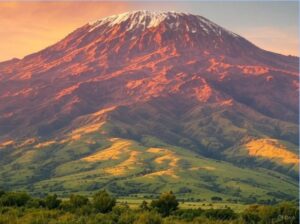
Kilimanjaro’s appeal transcends its impressive statistics. This freestanding mountain—meaning it rises independently rather than as part of a mountain range—creates a dramatic spectacle visible across the East African plains. The mountain’s iconic snow-capped summit, though threatened by climate change, presents a striking contrast against the tropical landscape below. This juxtaposition of ecosystems makes Kilimanjaro a natural wonder attracting scientists, photographers, and adventurers alike.
The mountain’s volcanic origins create fascinating geological features. Three distinct volcanic cones comprise Kilimanjaro: Kibo (the highest), Mawenzi (the most rugged), and Shira (the oldest and collapsed). While volcanic activity ceased long ago, occasional fumaroles remind visitors of the powerful forces that built this giant. The summit plateau contains an impressive crater spanning over two kilometers, within which sits a smaller ash pit crater—remnants of the mountain’s explosive past.
Kilimanjaro’s biodiversity rivals its geological significance. The mountain harbors five ecological zones compressed into a vertical journey of less than 5,000 meters. Lower slopes support cultivation where local communities grow coffee, bananas, and vegetables in fertile volcanic soil. Above cultivation, montane rainforest thrives with towering trees, hanging mosses, and diverse wildlife including elephants, leopards, and numerous primate species. Higher still, heath and moorland give way to alpine desert before reaching the arctic summit zone. This ecological diversity makes each day’s trek visually distinct and ecologically fascinating.
Decoding Route Options for Your Climb
Route selection represents your most important pre-climb decision, fundamentally shaping your experience, success probability, and overall satisfaction. Each of Kilimanjaro’s seven routes offers distinct advantages, challenges, and characteristics worth understanding thoroughly.
Machame Route dominates among international climbers for compelling reasons. This six to seven-day western approach delivers excellent scenery variety, smart acclimatization through elevation gains and losses, and well-established infrastructure. The route features the famous Barranco Wall—a thrilling scramble requiring hands but not technical climbing skills—and spectacular camps with panoramic views. The main compromise involves popularity; you’ll share trails and camps with many fellow adventurers. Success rates hover around 80-85% for six-day itineraries, climbing to 85-90% with an extra acclimatization day.
Lemosho Route caters to those prioritizing wilderness and success over budget constraints. Beginning from Kilimanjaro’s remote western side, this seven to nine-day trek traverses pristine forests and offers superb acclimatization profiles. The longer duration allows your body optimal time adapting to altitude changes, resulting in success rates consistently exceeding 90%. Lower traffic and extended wilderness immersion justify the premium pricing. Lemosho represents the gold standard for those who can afford additional time and expense.
Rongai Route distinguishes itself by approaching from the mountain’s drier northern flank near Kenya’s border. This six to seven-day option attracts climbers during rainy seasons when northern slopes receive less precipitation. The steadier, gentler gradient appeals to those preferring consistent climbing over dramatic elevation changes. Wildlife encounters occur more frequently on Rongai’s lower slopes. The trade-off involves less optimal acclimatization compared to western routes, though success rates remain respectable at 75-80%.
Marangu Route holds historical significance as Kilimanjaro’s oldest established path. Its nickname “Coca-Cola Route” references both relative ease and hut refreshment availability. Sleeping huts replace camping, appealing to those who prefer beds over ground sleeping. However, the standard five to six-day schedule compresses acclimatization dangerously, contributing to lower success rates around 60-65%. Marangu’s seven-day variant improves acclimatization substantially, though many operators don’t offer it. Choose Marangu only if hut accommodation strongly appeals and you commit to the longer itinerary.
Northern Circuit circumnavigates Kilimanjaro via the mountain’s quietest northern slopes over eight to nine days. This newest established route maximizes acclimatization through gradual ascent and extensive duration while offering 360-degree perspectives of the volcanic massif. Limited traffic, pristine wilderness, and success rates approaching 95% make Northern Circuit ideal for those prioritizing summit success and solitude over budget considerations. The extended duration and remote access create premium pricing.
Umbwe Route challenges experienced mountain trekkers through Kilimanjaro’s steepest, most direct ascent. This six-day route features aggressive elevation gain and technical terrain testing fitness and determination. Rapid altitude gain compromises acclimatization, resulting in modest success rates despite shorter duration. Only climbers with proven high-altitude experience should consider Umbwe. The reward lies in solitude and the satisfaction of conquering Kilimanjaro’s most demanding route.
Building Physical Readiness for Summit Success
Physical preparation separates successful summiteers from disappointed would-be climbers. While Kilimanjaro isn’t technically difficult, the physical demands at altitude challenge even supremely fit individuals. Summit attempts typically span 12-16 hours of continuous exertion at elevations where oxygen availability drops to half that at sea level.
Cardiovascular conditioning forms your foundation. You need aerobic capacity sustaining six to eight hours of daily trekking across consecutive days at progressively higher elevations. Structure training around four to five weekly cardiovascular sessions lasting 45-90 minutes each, plus one extended session (3-5 hours) weekly. Running, cycling, swimming, rowing, or hiking all develop necessary endurance. Gradually increase session duration and intensity over your training period, peaking approximately two weeks before departure.
Strength development prevents injury and maintains efficiency when exhausted. Focus on functional movements targeting legs, core, and posterior chain. Exercises like squats, lunges, step-ups, deadlifts, Bulgarian split squats, and calf raises build leg strength for uphill power and downhill control. Core exercises—planks, side planks, dead bugs, and mountain climbers—stabilize your trunk on uneven terrain. Include two to three strength sessions weekly, emphasizing moderate weight with higher repetitions (12-20 reps) developing muscular endurance rather than maximum strength.
Hiking-specific conditioning provides irreplaceable preparation. Schedule weekly hikes with progressive distance and elevation gain on increasingly challenging terrain. Train with a loaded backpack, gradually building to 10-15 kilograms carried comfortably for several hours. This specific training adapts your body to actual climb demands while allowing you to test and break in all footwear and equipment. If mountain access is limited, substitute stadium stairs, steep hills, or treadmill incline walking.
Recovery and injury prevention protect your training investment. Include rest days allowing adaptation to training stress. Incorporate stretching, foam rolling, and mobility work preventing common overuse injuries. Listen to your body—persistent pain signals potential injury requiring attention before it derails your climb. Consider professional guidance from personal trainers or physical therapists if you’re new to structured training.
Begin training minimum four months before departure, though six months provides ideal preparation time. Consistency matters more than intensity—regular moderate training outperforms sporadic intense sessions. Taper training in the final two weeks before departure, reducing volume while maintaining intensity, allowing your body to recover and arrive fresh.
Conquering the Altitude Challenge
Altitude represents Kilimanjaro’s defining challenge and primary reason for summit failures. Understanding altitude’s physiological effects and implementing proven mitigation strategies dramatically improves your summit probability while ensuring safety.
Atmospheric pressure decreases with elevation, reducing oxygen molecules available per breath. At Kilimanjaro’s summit, atmospheric pressure approximates 50% of sea level pressure, effectively halving oxygen availability. Your body compensates through multiple physiological adaptations requiring days to weeks developing fully. Attempting to ascend faster than your body can adapt triggers altitude illness ranging from uncomfortable to life-threatening.
Acute Mountain Sickness (AMS) manifests through headaches, nausea, dizziness, fatigue, sleep disturbance, and appetite loss. Most Kilimanjaro climbers experience mild symptoms as normal adaptation responses. Symptoms typically improve with acclimatization time, rest, hydration, and slower ascent. However, continuing to ascend with worsening symptoms invites serious complications.
High Altitude Pulmonary Edema (HAPE) develops when fluid accumulates in lungs, causing severe breathlessness, chest tightness, coughing (possibly with blood), and extreme fatigue. High Altitude Cerebral Edema (HACE) involves brain swelling causing severe headaches unresponsive to medication, confusion, loss of coordination (ataxia), and altered consciousness. Both conditions require immediate descent and medical treatment—they can prove fatal within hours without intervention.
Proven acclimatization strategies maximize success while minimizing risks:
- Select appropriate route duration: Seven to nine-day routes allow superior acclimatization compared to five to six-day alternatives
- Embrace “pole pole” pacing: Maintain deliberately slow speeds regardless of how strong you feel early in the climb
- Hydrate aggressively: Consume four to five liters of fluids daily through water, tea, and soups
- Follow “climb high, sleep low”: Take afternoon acclimatization hikes above camp elevation before returning to lower camps for sleeping
- Maintain adequate nutrition: Eat consistently despite altitude-suppressed appetite—your body needs fuel
- Avoid suppressants: Alcohol and sleep medications impair breathing and acclimatization
- Communicate symptoms honestly: Report all symptoms immediately—guides need accurate information making safety decisions
- Consider prophylactic medication: Discuss Diamox (acetazolamide) with your physician—this medication accelerates acclimatization in many climbers
Remember that physical fitness doesn’t prevent altitude sickness. Elite athletes and casual trekkers suffer similarly at altitude. Susceptibility varies individually and unpredictably. Young, fit climbers sometimes struggle while older, less fit individuals sail through. The key lies in conservative ascent, honest symptom communication, and willingness to descend if necessary.
Assembling Your Equipment Arsenal
Kilimanjaro’s extreme environmental variation—from 30°C tropical heat to -20°C arctic cold—demands versatile, reliable equipment. Smart gear selection balances functionality, weight, and cost while ensuring comfort and safety throughout your journey.
Layered clothing system manages temperature regulation across diverse conditions:
- Base layers: Moisture-wicking synthetic or merino wool tops and bottoms (pack three to four sets for rotation)
- Insulation layers: Midweight fleece jacket, lightweight insulated jacket, and insulated pants provide warmth without excessive bulk
- Weather protection: Waterproof, breathable shell jacket and pants shield against wind, rain, and snow
- Summit gear: Heavy insulated parka and insulated pants combat extreme summit cold
- Extremity protection: Warm beanie, sun hat, balaclava or neck gaiter, liner gloves, insulated gloves or mittens, and multiple sock pairs (liner plus thick hiking socks)
Footwear selection critically impacts comfort and performance:
- Boots: Waterproof hiking boots with ankle support, thoroughly broken in during training
- Socks: Multiple pairs combining thin liner socks with thick cushioned hiking socks
- Gaiters: Essential for keeping debris, mud, and snow out of boots
- Camp footwear: Lightweight shoes or sandals for evening camp comfort
Sleep system ensures critical rest enabling recovery:
- Sleeping bag: Rated to minimum -10°C, preferably -15°C for cold sleepers
- Sleeping pad: Insulated pad prevents ground cold from draining body heat
- Pillow: Small inflatable pillow improves sleep quality
Trekking equipment:
- Trekking poles: Adjustable poles dramatically reduce knee strain and improve stability—perhaps the single most valuable equipment item
- Backpack: 35-50 liter daypack for daily essentials (porters carry main duffel)
- Water management: Two one-liter insulated bottles (bladder systems freeze at high camps)
- Headlamp: Bright LED lamp with spare batteries essential for summit night
- Sunglasses: UV400+ protection with side shields
Personal essentials:
- Sun protection: SPF 50+ sunscreen and lip balm with SPF
- Hygiene items: Wet wipes, hand sanitizer, biodegradable soap, quick-dry towel
- Medical supplies: Personal medications, altitude medication, blister prevention and treatment, basic first aid
- Snacks: Energy bars, nuts, dried fruit, candy—foods you enjoy providing quick energy
- Electronics: Camera, phone, power bank (charging facilities limited)
- Documents: Passport, vaccination certificates, insurance documents, emergency contact information
Many items can be rented from tour operators if you prefer not to purchase specialized gear. Focus purchasing on items requiring fit and comfort—boots, backpack, and clothing—while renting major items like sleeping bags and cold-weather parkas.
Navigating Daily Mountain Life
Understanding typical daily routines and camp dynamics helps you prepare mentally for mountain realities and reduces anxiety about unknown aspects of the experience.
Morning routines begin with wake-up calls around 6:30-7:00 AM, accompanied by hot tea or coffee delivered to your tent. After packing sleeping bags and organizing gear, communal breakfast offers substantial meals including porridge, eggs, toast or pancakes, fruit, and hot beverages. Porters efficiently break down camp while you prepare for the day’s trek.
Trekking patterns follow established rhythms. Departure occurs around 8:00-8:30 AM after final gear checks. Guides maintain deliberately slow paces epitomizing the “pole pole” philosophy. Frequent breaks every hour allow rest, hydration, snacks, and bathroom stops. Guides share mountain knowledge, monitor your condition, and adjust pacing as needed. Daily trekking typically spans four to eight hours depending on route stage, terrain, and acclimatization needs.
Arrival routines find porters already establishing camp when you arrive each afternoon. Your tent stands erected, gear organized, and hot washing water awaits. Afternoon hours allow rest, journaling, photography, socializing with fellow trekkers, or acclimatization walks. Many climbers find afternoons surprisingly relaxing despite morning exertions.
Evening activities center around communal dining. Dinner service begins around 7:00 PM, featuring hearty multi-course meals with soups, proteins, starches, vegetables, and desserts. Guides conduct evening health assessments and briefings about the following day. Early bedtimes around 8:00-9:00 PM prepare you for the next day’s challenges and help with altitude acclimatization.
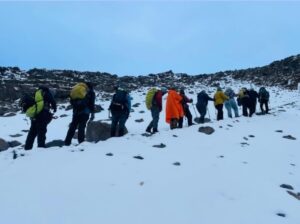
Summit night dramatically breaks normal patterns. Wake-up calls arrive around 11:00 PM for light snacks and hot drinks. Departure occurs near midnight, beginning the long push through darkness toward the crater rim. Headlamps illuminate the path as you ascend through extreme cold and exhaustion. The slow climb takes six to nine hours reaching Stella Point or Gilman’s Point on the crater rim, followed by one to three additional hours circling to Uhuru Peak. Summit success brings euphoria, photos, and tears before beginning the grueling descent back to high camp, brief rest, then continued descent to lower elevations.
Selecting Quality Tour Operators
Tour operator selection profoundly impacts your experience, safety, and the welfare of climbing crews. Tanzania’s tourism industry spans from excellent to exploitative operators, making careful selection essential.
Quality indicators include:
- Safety prioritization: Proper guide-to-client ratios, comprehensive medical equipment, evacuation protocols, and guide qualifications
- Porter welfare: Fair wages meeting KPAP standards, adequate equipment provision, reasonable weight limits, and dignified treatment
- Transparent pricing: Clear itemization of included services and exclusions
- Positive reviews: Consistent praise across independent review platforms
- Established reputation: Years of operation with verifiable track records
- Communication quality: Responsive, detailed answers to pre-booking questions
Warning signs suggesting problematic operators:
- Suspiciously low pricing: Quality service costs money; rock-bottom prices compromise safety or exploit porters
- Vague porter policies: Reluctance discussing crew treatment signals potential problems
- Pressure tactics: Aggressive sales approaches or artificial urgency
- Poor communication: Slow, evasive, or incomplete responses to inquiries
- Negative review patterns: Consistent complaints about safety, crew treatment, or service quality
Budget minimum $1,800-2,500 for quality six to seven-day climbs, with premium routes and longer durations costing $3,000-5,000. Price includes park fees, professional guides, porters, camping equipment, meals, and transfers. Additional expenses include crew tips ($250-350), travel insurance, vaccinations, visa fees, personal equipment, and international flights.
Conclusion
Climbing Kilimanjaro offers an extraordinary adventure accessible to determined individuals willing to prepare properly and commit fully to the challenge. This magnificent mountain tests physical capabilities, mental resilience, and adaptability while delivering profound rewards extending far beyond summit success. The journey encompasses spectacular natural beauty, meaningful cultural exchanges, and personal discoveries revealing inner strengths you may not have known existed.
Success requires intelligent preparation, appropriate route selection, altitude respect, and unwavering determination. Yet the true value lies not solely in standing atop Uhuru Peak, but in the transformation occurring through sustained effort, challenge navigation, and connection with something greater than yourself. Kilimanjaro teaches lessons about perseverance, humility, and human potential that resonate long after you’ve returned home.
Whether you summit or turn back honorably, the attempt itself builds character and creates lasting memories. The mountain isn’t going anywhere—it will still stand majestically above the African plains whether you reach the top this time or return for another attempt. What matters most is approaching the challenge with proper respect, thorough preparation, and commitment to safety and ethical practices.
Key Takeaways
- Technical simplicity meets physical challenge: No mountaineering skills required, but excellent fitness and determination are essential
- Route length determines success: Seven to nine-day routes provide 85-95% success rates versus 60-70% for shorter alternatives
- Altitude trumps fitness: Even elite athletes suffer altitude sickness; conservative pacing and acclimatization strategies matter most
- Training timeline matters: Begin comprehensive preparation 4-6 months before departure with cardiovascular, strength, and hiking-specific training
- Layering solves temperature extremes: Versatile clothing systems manage 50°C temperature variation from base to summit
- Operator selection is critical: Choose ethical companies prioritizing safety and porter welfare over maximum profits
- Pole pole philosophy works: Deliberately slow pacing prevents altitude sickness and conserves energy for summit attempts
- Realistic budgeting prevents problems: Quality climbs cost $2,000-5,000 plus tips, equipment, insurance, and travel expenses
- Environmental stewardship matters: Practice Leave No Trace principles and support conservation protecting Kilimanjaro’s ecosystems
- Cultural connections enrich experience: Engage respectfully with climbing crews and local communities sharing their mountain home
- Mental preparation equals physical training: Visualization, mantras, and psychological strategies prove crucial during difficult moments
- Flexibility ensures safety: Summit ambitions matter less than safe return—turn back honorably when circumstances require
Frequently Asked Questions
What is the best route for first-time Kilimanjaro climbers? The Machame Route offers the best balance for most first-time climbers, combining excellent scenery, good acclimatization, proven success rates (80-85%), and reasonable pricing. The Lemosho Route provides superior acclimatization and success (90%+) for those who can afford extra time and cost. Avoid the Marangu Route’s standard five to six-day itinerary due to poor acclimatization.
How difficult is climbing Kilimanjaro compared to other mountains? Kilimanjaro requires no technical climbing skills, making it more accessible than peaks like Mont Blanc or Denali. However, altitude creates serious challenges. Success demands strong cardiovascular fitness, mental toughness, and proper acclimatization. Think of it as extremely challenging trekking rather than mountaineering—physically demanding but technically straightforward.
What happens if I cannot complete the climb? Guides constantly monitor climbers’ health and make descent decisions when necessary. If altitude sickness or other issues prevent summit attempts, you’ll descend to lower elevations for recovery. Most operators don’t offer refunds for incomplete climbs, as costs are incurred regardless. Travel insurance with trip interruption coverage provides some financial protection.
How fit do I need to be to climb Kilimanjaro? You need excellent cardiovascular endurance for sustained exertion at altitude. If you can comfortably hike 10-12 kilometers with 10 kilograms on your back, you have adequate baseline fitness. However, specific training for 4-6 months dramatically improves success chances and enjoyment. Age matters less than fitness—people from teens to 80s summit successfully.
Is it safe to climb Kilimanjaro? Kilimanjaro is reasonably safe with proper precautions. Reputable operators, experienced guides, appropriate acclimatization, and honest symptom communication minimize risks. Deaths occur occasionally, almost always from altitude illness, cardiac events, or accidents. Following guide advice, ascending conservatively, and recognizing when to turn back keeps climbing safe.
Do I need travel insurance for climbing Kilimanjaro? Yes, comprehensive travel insurance with high-altitude coverage (minimum 6,000 meters) and emergency evacuation is mandatory. Standard policies typically exclude high-altitude activities. Helicopter evacuations can cost $5,000-15,000. Companies like World Nomads, IMG, or Global Rescue offer appropriate coverage. Don’t climb without proper insurance.
What vaccinations do I need for Tanzania? Yellow fever vaccination is required for entry if arriving from endemic countries. Recommended vaccines include hepatitis A and B, typhoid, tetanus, and routine immunizations. Antimalarial prophylaxis is recommended for lowland areas, though unnecessary at Kilimanjaro’s elevations. Consult travel medicine specialists 6-8 weeks before departure.
Can I climb Kilimanjaro independently without a guide? No. Tanzanian regulations require all Kilimanjaro climbers to hire licensed guides and book through registered tour operators. Independent climbing isn’t permitted. This regulation ensures safety standards, provides employment for local communities, and maintains environmental protections. All logistical arrangements must go through licensed operators.